
Industrial Electromechanical Battery Charging Timers
Industrial electromechanical battery charging systems rely on dependable timing components to maintain consistent charging intervals and repeatable switching across every charge cycle. At Midwest Timer Service, we design and manufacture cam-based timing mechanisms used in OEM battery charging equipment for applications such as forklifts, floor care machines, and other battery-powered industrial platforms.
These timing assemblies regulate charging cycle duration and coordinate switching events within charging equipment. The mechanical cam design allows charging systems to follow a defined timing program during each operating cycle. To support complete OEM timing assemblies, Midwest Timer Service also supplies synchronous motors that integrate directly with our timer mechanisms.
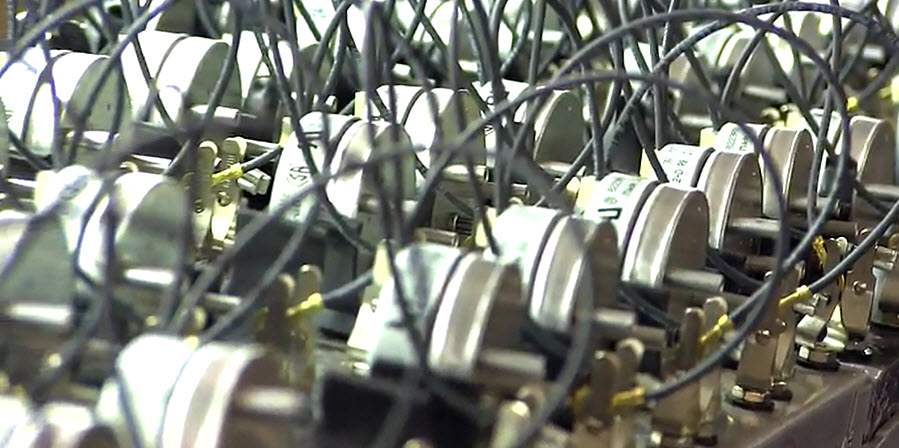
Electromechanical Timing for Industrial Charging Equipment
Industrial charging equipment operates on repeated cycles where accurate timing is required to manage charging intervals and electrical switching events. Electromechanical timing mechanisms provide a durable solution for equipment that must operate reliably over long production runs and in demanding environments.
Within industrial electromechanical battery charging systems, the timer assembly controls the progression of the charging cycle. The cam-driven mechanism activates switch contacts at predetermined points in the cycle, allowing charger circuits to energize, change states, or terminate the interval when the programmed timing sequence is complete.
Because the timing profile is physically defined by the cam configuration, these systems provide consistent mechanical timing across thousands of charging cycles. This approach allows OEM charger manufacturers to implement reliable industrial battery charging cycle timer systems that operate with minimal variation between cycles.
Timer Models Used in Industrial Battery Charging Systems
Midwest Timer Service manufactures several electromechanical timer designs that integrate into industrial battery charging equipment. Each model supports different switching configurations, current ratings, and enclosure requirements depending on the charger system architecture.
Common timer options for industrial electromechanical battery charging systems include:
- Model 180: A compact electromechanical timer commonly used in battery charging assemblies. Supports SPST or SPDT switching configurations with circuits rated up to 15 amps. The miniature design and plug-in terminal connection allow fast integration into charger control assemblies.
- Model 400: A manual-set interval timer designed for industrial battery charging cycle timing. Supports up to five SPST circuits or three SPST and two SPDT circuits, with switching capacity up to 25 amps, enabling multiple electrical events during the charging cycle.
- Model 480: A space-saving electromechanical timer switch for charger systems with limited enclosure space. Offers two SPST switches or one SPST and one SPDT switch, rated up to 25 amps, while maintaining a compact installation footprint.
- Model 444: A versatile timer for equipment assemblies requiring higher current switching and global voltage compatibility. Supports SPST or SPDT configurations up to 25 amps and operates at 24 VAC, 115 VAC, or 230 VAC with 50/60 Hz capability.
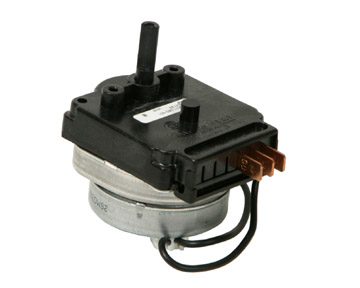
These timer models allow equipment manufacturers to implement electromechanical timing for industrial charging equipment while selecting the switching capacity and mechanical configuration that best matches their system requirements.
Synchronous Motors for Industrial Battery Charging Cycle Timing
Many industrial battery charging cycle timer systems use a synchronous motor to drive the cam mechanism that advances the timing sequence. Midwest Timer Service supplies synchronous motors alongside our electromechanical timer assemblies so OEM manufacturers can implement a fully matched timing solution within their charging equipment.
The synchronous motor rotates the cam stack inside the timer assembly, actuating switch contacts according to the programmed timing profile. Because the motor operates in synchronization with the electrical supply frequency, it maintains a stable rotational speed that delivers consistent and repeatable cycle timing.
When charger equipment requires specific voltage or frequency compatibility, the timer mechanism and synchronous motor can be configured together to match the electrical characteristics of the charging system, simplifying integration while maintaining reliable operation throughout the charging cycle.
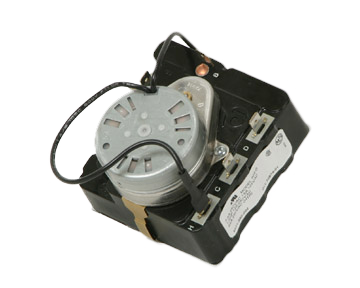
Supporting OEM Industrial Battery Charging Equipment
Industrial battery charging equipment manufacturers rely on Midwest Timer Service for electromechanical timing assemblies that integrate directly into OEM designs. Our engineering team works closely with equipment manufacturers to align cam timing programs, switching configurations, and mounting interfaces with the requirements of the charging system.
Whether supporting a new charger platform or an established production program, we help manufacturers implement timing mechanisms that maintain consistent performance throughout repeated charging cycles.
Talk with a Timer Applications Engineer
Designing or updating an industrial electromechanical battery charging system? Our team can help you select the right timer configuration for your OEM charging equipment.
Contact Midwest Timer Service to review your industrial battery charging cycle timer system requirements, including cycle intervals, switching configurations, and production volumes. If your equipment requires a synchronous motor to drive the timer mechanism, we can also supply a complete timing assembly matched to your OEM design.